Overview
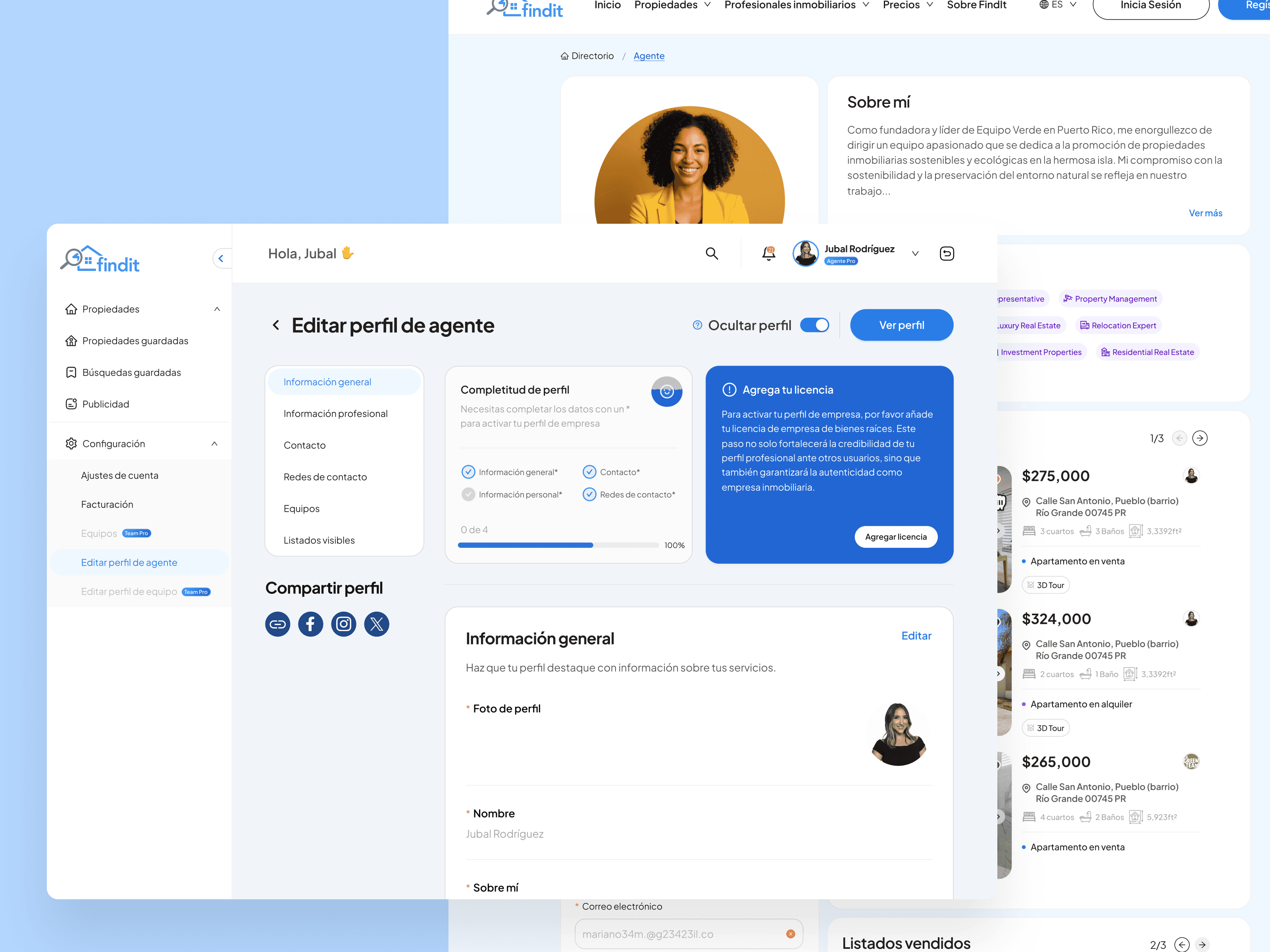
Findit is a real estate marketplace where professionals can showcase their listings and connect with potential clients. However, most users were ignoring the value of having a public professional profile limiting their visibility, credibility, and lead generation.
This case study covers the redesign of the Professional Profile Activation Flow, aimed at increasing user adoption through Behavioral Design principles (COM-B model). The feature encouraged users to complete their profiles early in their journey, improving both engagement and trust within the platform.
Client:
Findit
My Role:
Product Designer, Behavioral Designeri
Services Provided:
UX/UI Design, Behavioral Design, Product Strategy
Industry:
PropTech, Saas & Web
Team:
Impact
+433% increase in profile activations
Onboarding redesigned using the COM-B behavior model
Initiated a data- and behavior-driven UX culture within the team
Before the Redesign
The Challenge
At Findit, a real estate marketplace, users were overlooking the value of creating a public professional profile. This limited their credibility, visibility on search engines, and lead generation.
Our goal was to encourage more users to activate and complete their profile within their first days on the platform. To achieve this, we redesigned the activation flow from the ground up, applying Behavioral Design principles.
Kickoff
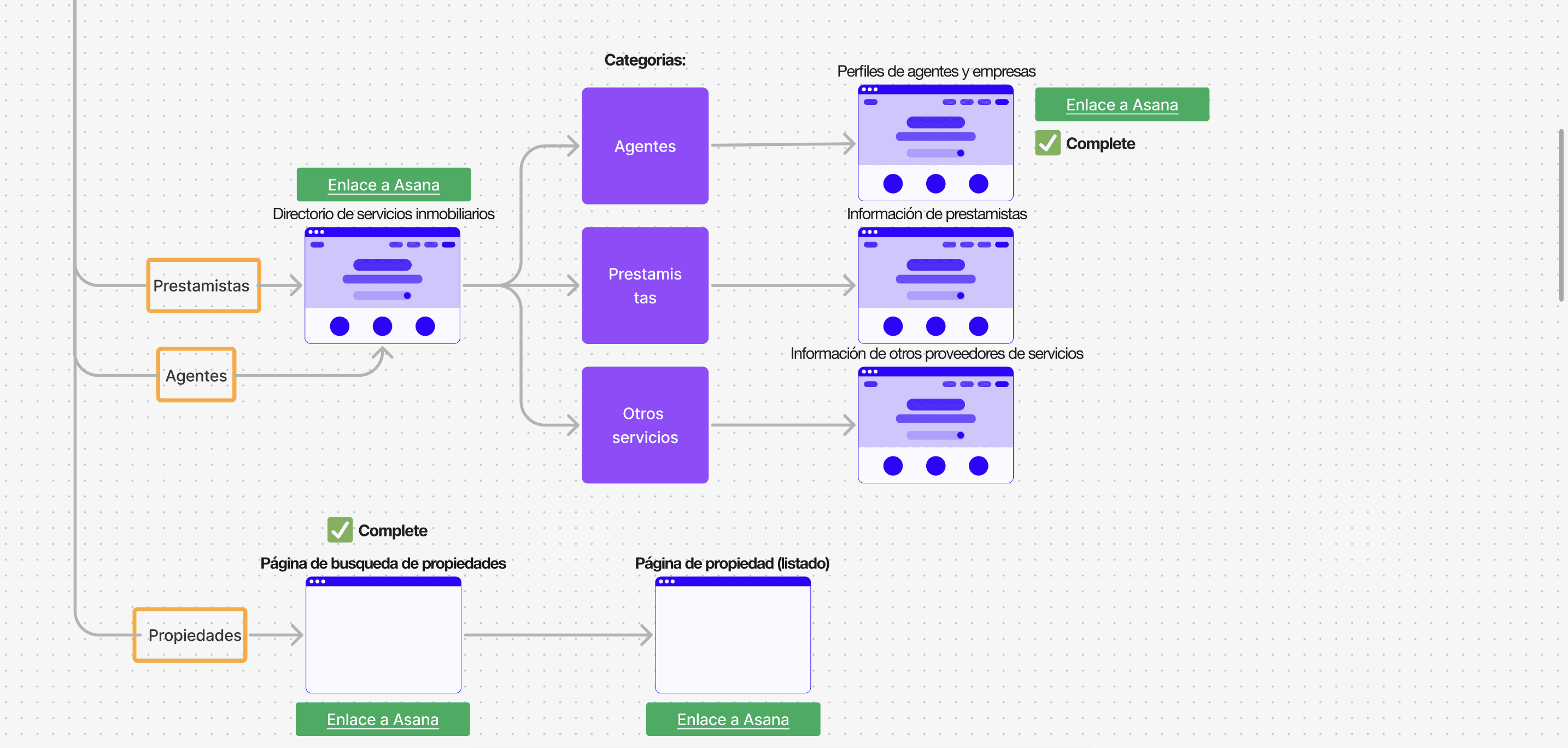
The project began with unfinished wireframes left behind by a previous designer. Starting from those partial drafts, I restructured the profile hierarchy based on user type and led several working demos with the team (CEO, CTO, Marketing, Dev), refining copy and key flows. I notice that even if we improve the design of this flows, users wouldn't know the value of this because they didnt know they couldnt that based on user feedback, so we had to design for the behavior as well.
Problem Framing
Before starting, it was important for me to understand why profile activation was a core behavior for the product.
I identified several key reasons:
Activating the profile increased both agent and platform visibility, since profiles were indexed on Google.
Complete profiles built trust and reduced friction when buyers contacted agents, improving lead quality.
The number of active profiles served as a proxy for marketplace health — more visible agents meant more listings, interactions, and perceived value.
Once agents invested effort in completing their profiles, they were more likely to stay and engage, strengthening retention.
Problem: Real estate agents were not activating their profiles within the first days after registration, reducing marketplace visibility and affecting the overall supply and credibility of the platform.
What we believed would work
We first defined the target behavior:
“Users activate and complete their professional profile within the first three days after registration.”
Behavioral metric aligned with the business goal:
Increase profile activations by +5% within 90 days.
Hypothesis:
By clearly communicating the value of a professional profile from the start, and reducing friction through guided nudges, a simpler flow, and concise copy, users would be more likely to complete their profiles earlier boosting activation and engagement.
Understanding the barriers
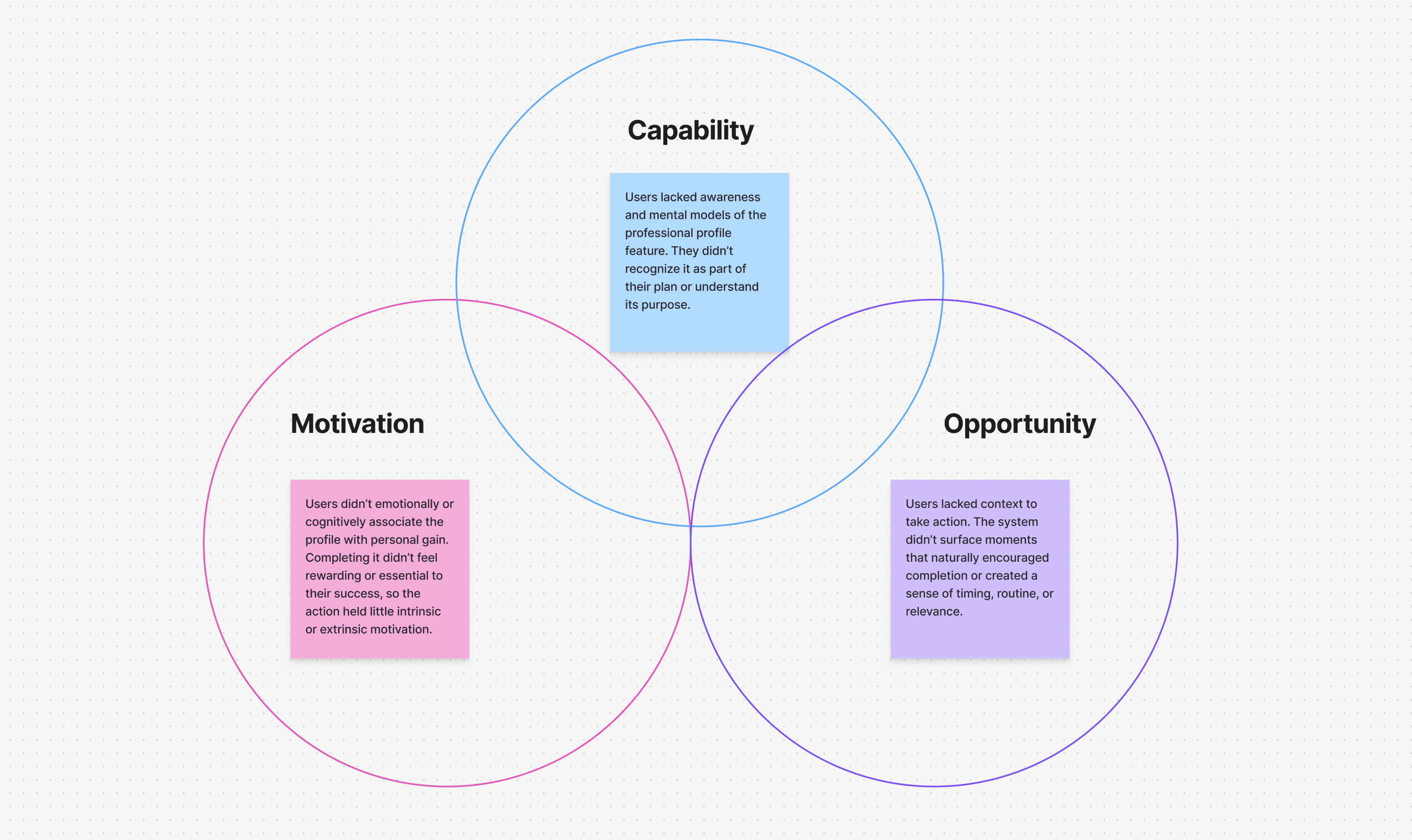
Through internal research and analysis of collected insights observing and having interview with stakeholders, I mapped behavioral barriers using the COM-B framework to understand what prevented users from activating their professional profiles.
This approach revealed key behavioral frictions that blocked activation and helped me connect the right behavioral levers to address each barrier.
Behavioral interventions
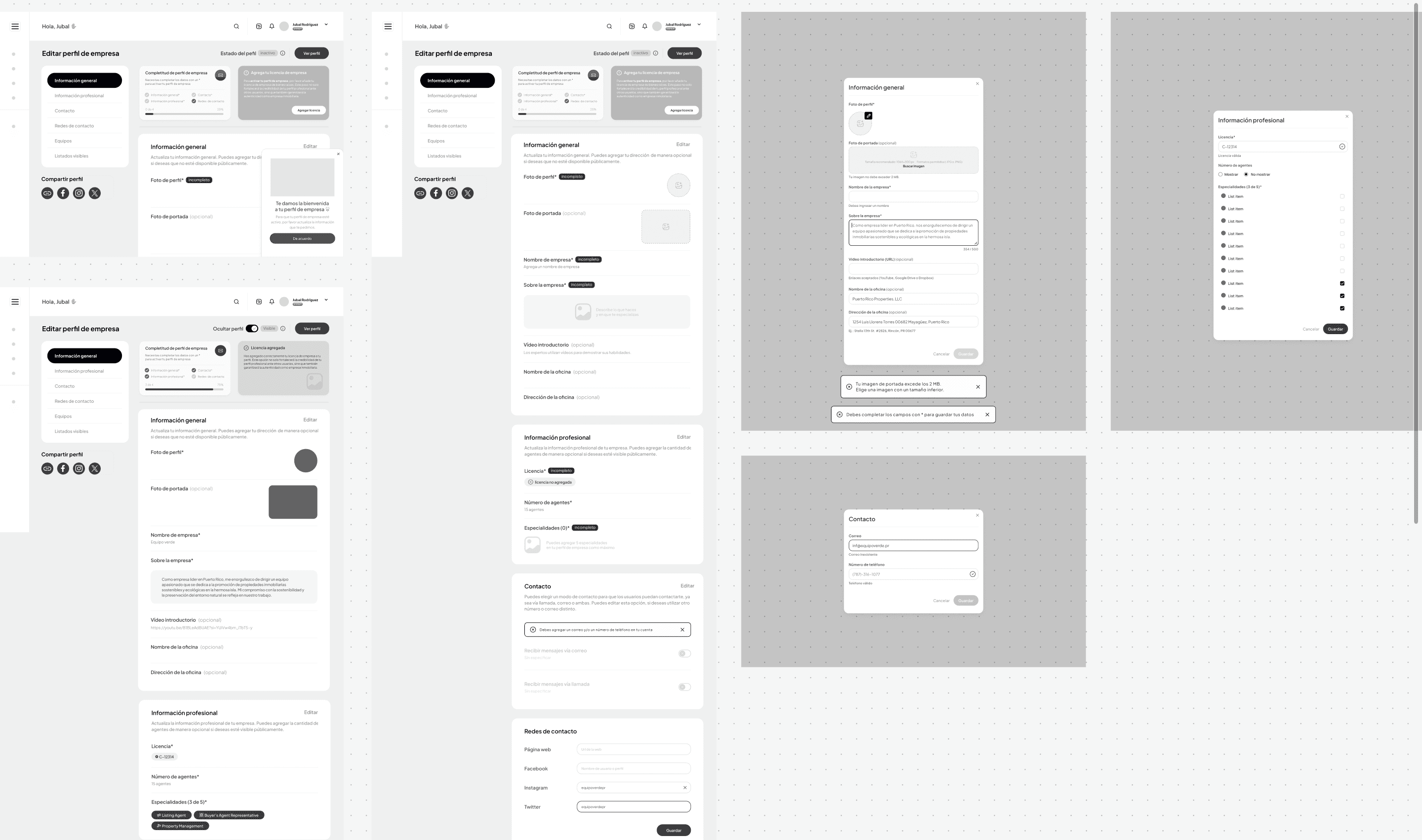
Before moving into high-fidelity design, we created a series of low-fidelity sketches to map out the key user flows and, most importantly, refine the UX copy that would guide behavior.
Through iterative sessions with the CEO, CTO, and Marketing team, we validated the tone, order, and logic of each step, ensuring every message aligned with the behavioral triggers defined earlier.
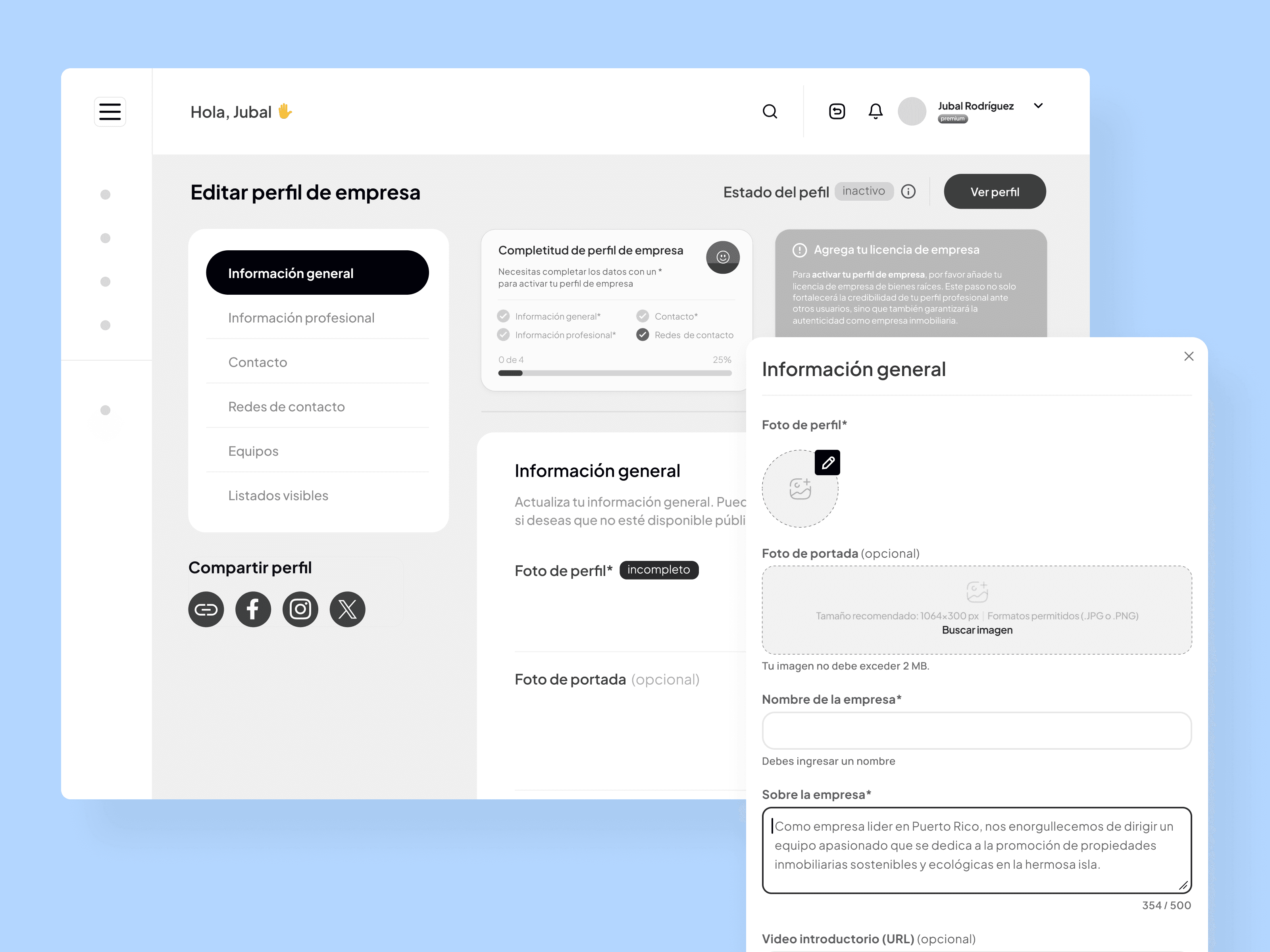
Before redesigning, I started from a key principle: not all Findit users behave the same way, nor are they driven by the same motivations or capabilities.
To address that, we defined two main user segments:
Independent Agents: individual professionals seeking personal visibility and credibility among potential buyers.
Agencies or Agency Managers: responsible for multiple agents, focused on brand positioning and team management efficiency.
This also was crucial to redesign each flow based on the use case for each type of user.
Key features
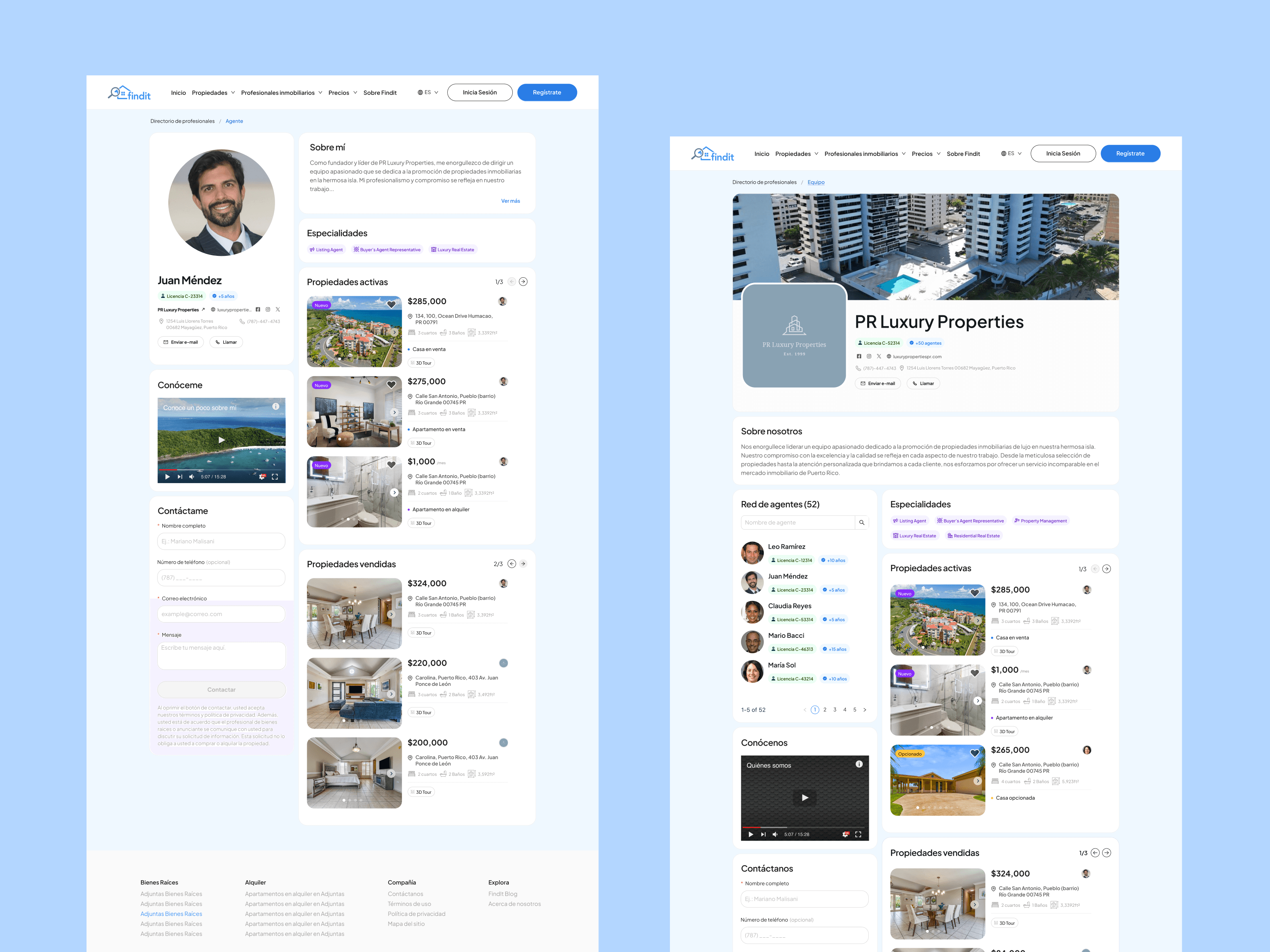
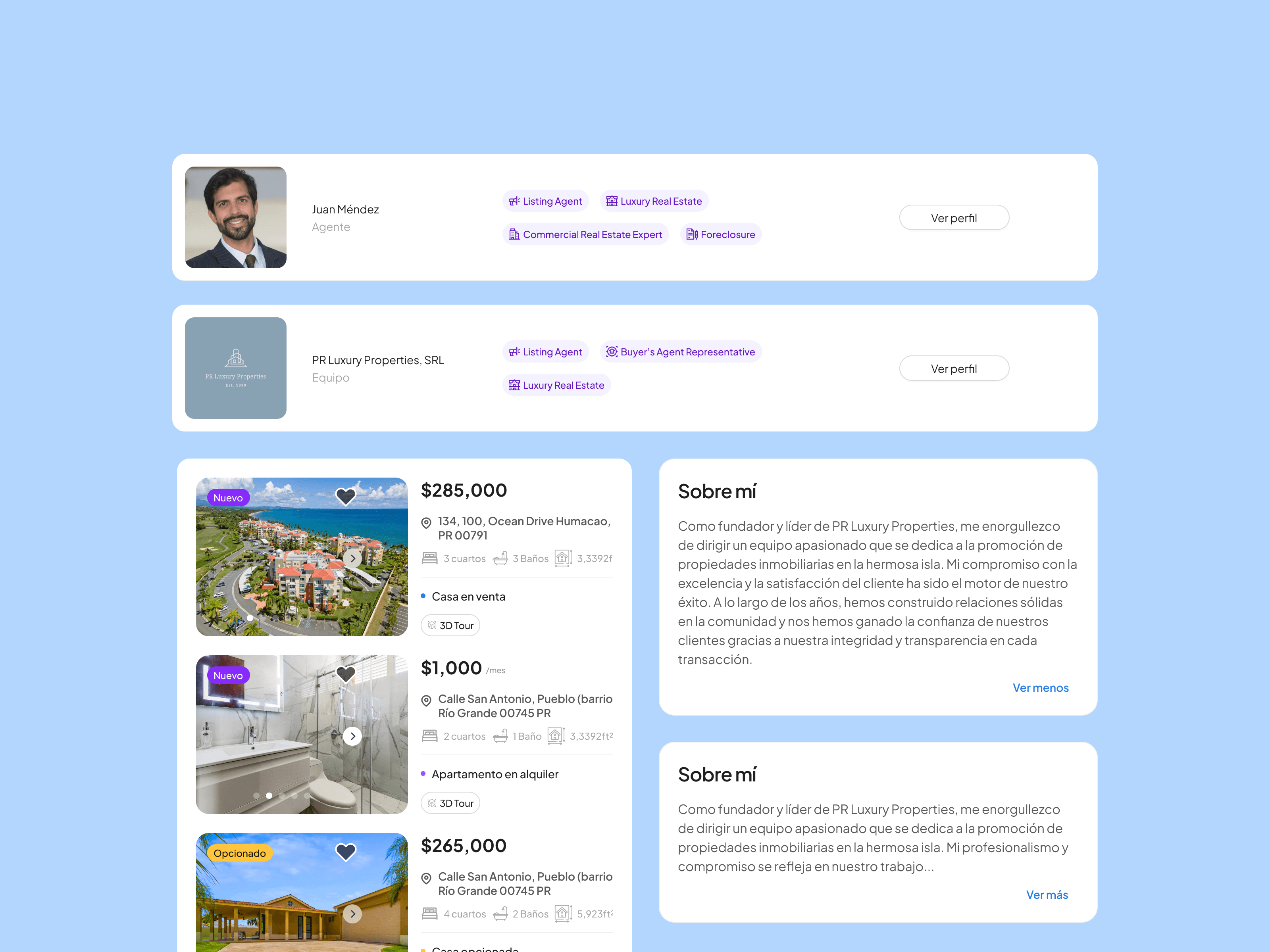
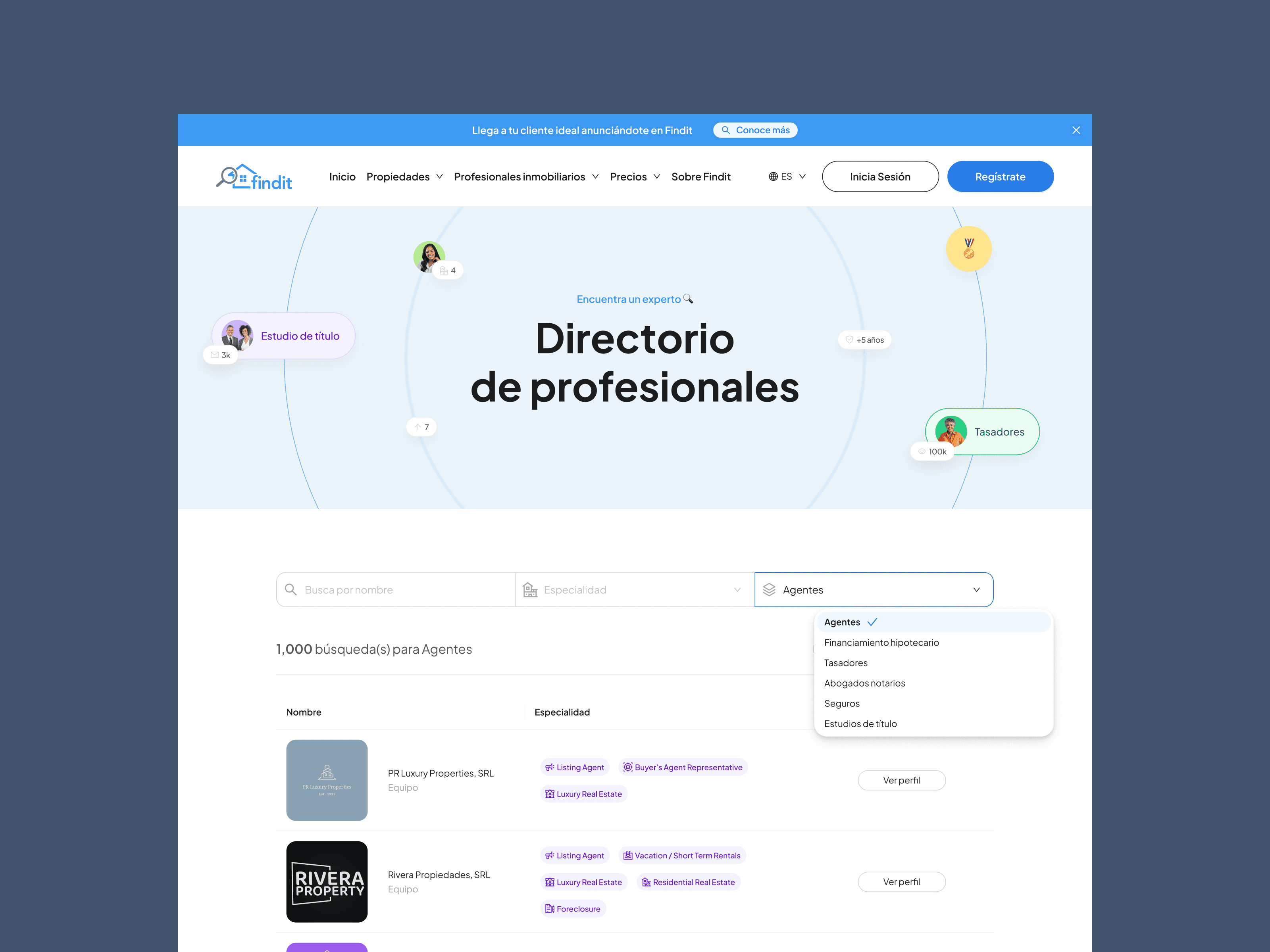
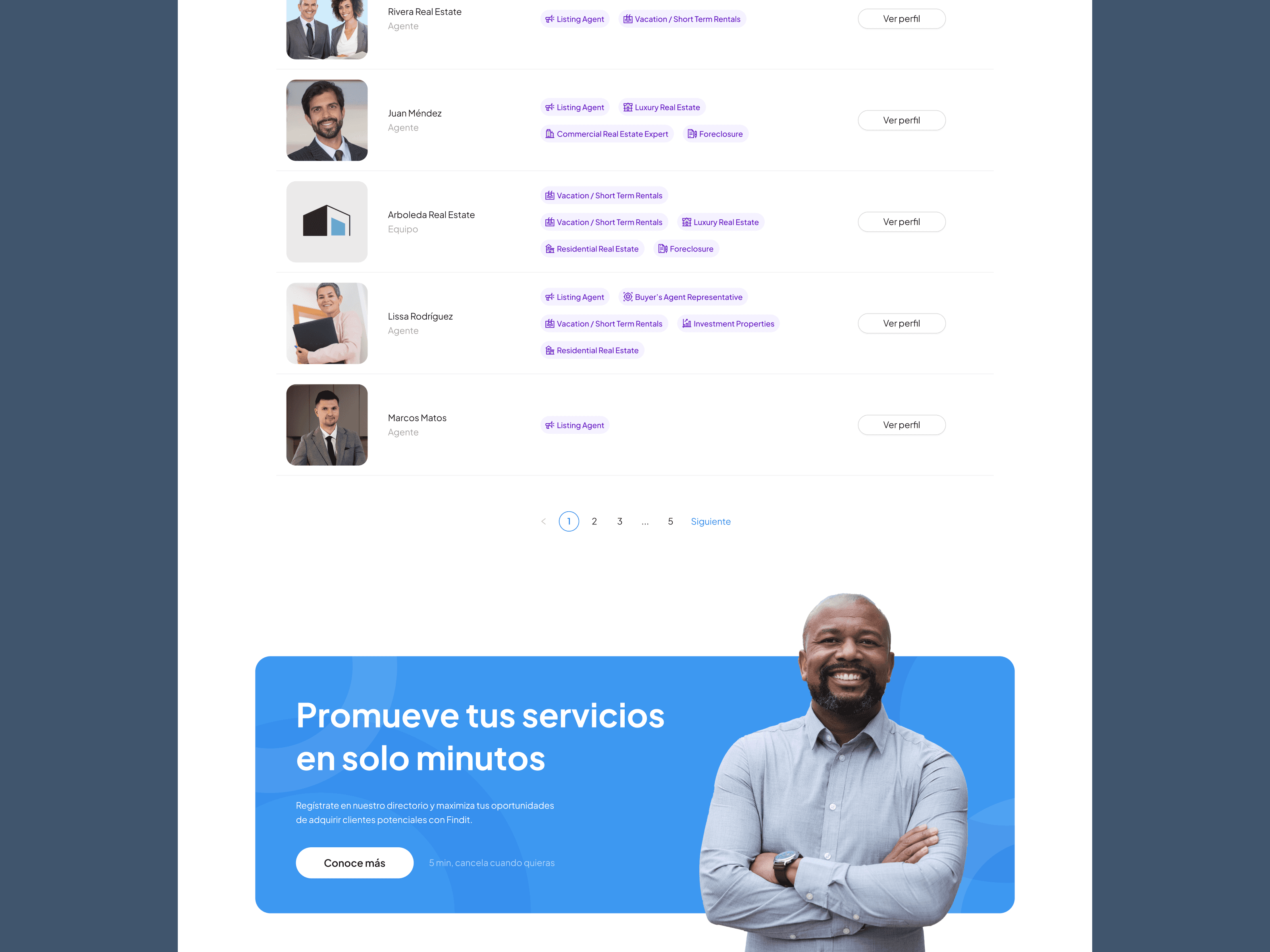
Design iterations
We began with legacy wireframes and iterated several times to restructure the profile by user type. Below are key stages:
Initial wireframe (reorganizing inherited layout)
Profile hidden in settings. No empty states or guidance.First iteration after internal demo
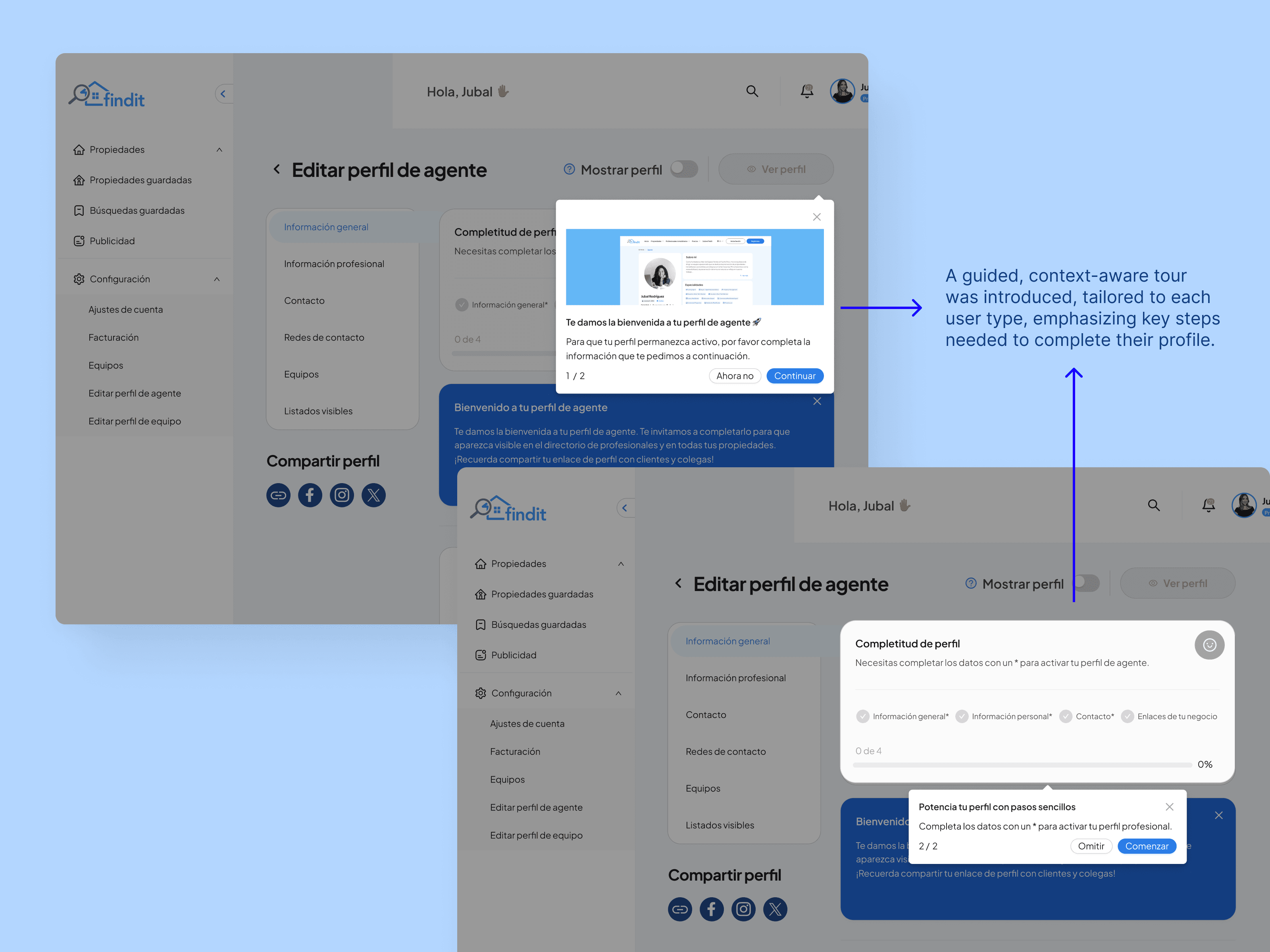
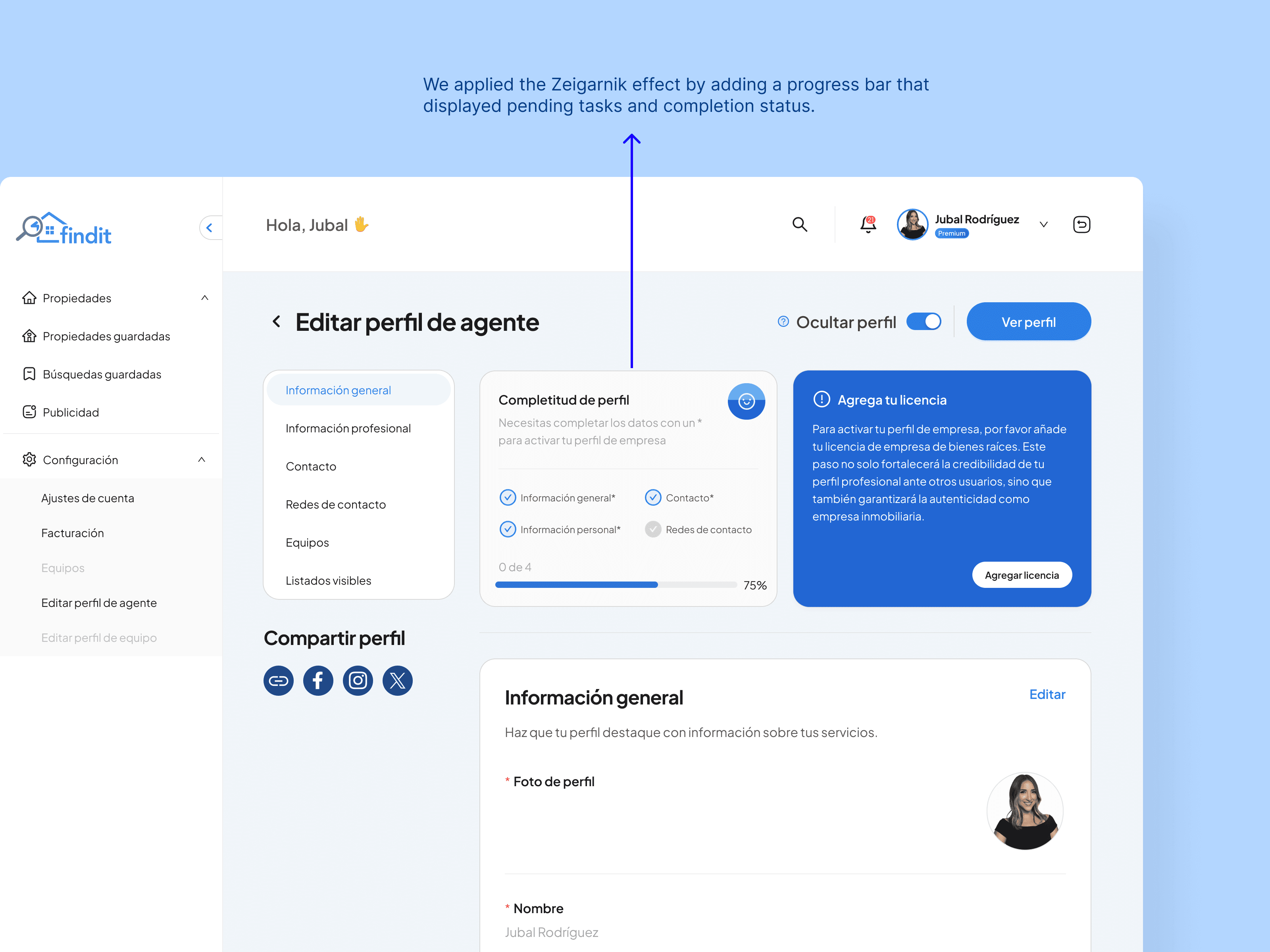
Profile moved to dashboard. Progress bar added.Final validated version
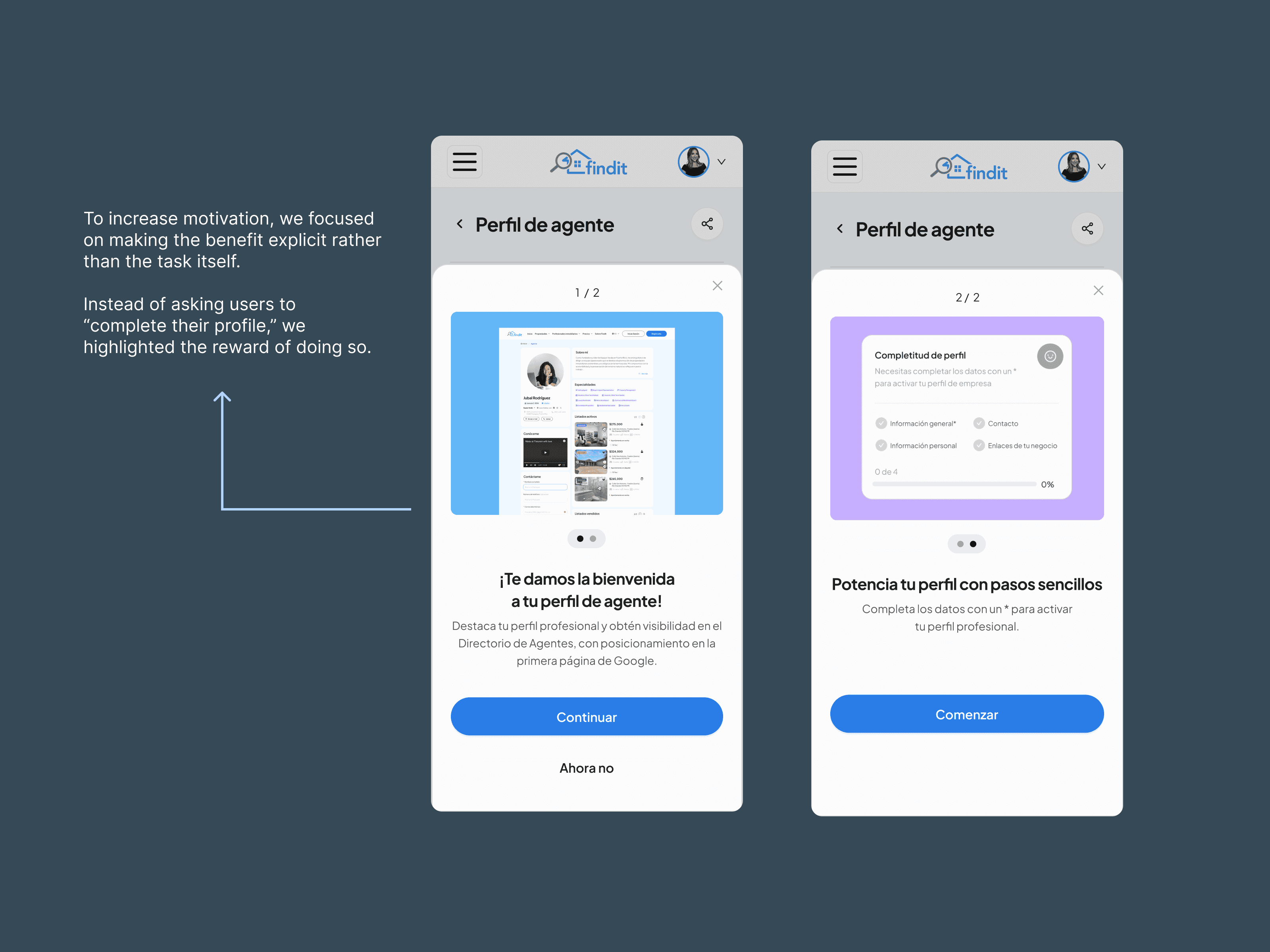
Segmented copy and guided tour introduced at onboarding.
Results & Impact
Increased from 3 to 16 active profiles in the next user cohort
+433% uplift in profile activation
Qualitative feedback confirmed users now saw the value in completing their profiles
The business team began adopting UX metrics and behavior-based culture
Challenges
Initially, the business was reluctant to invest in research or analytics. We had to design based on informed assumptions and validate through user behavior later.
We postponed a delightful, non-core feature: an animated character reflecting progress. It’s now prioritized as a future emotional reinforcement.
Next steps
Track cohorts to determine if completed profiles lead to more qualified leads
Apply loss aversion principles: “Canceling your subscription means losing your Google-indexed profile”
Activate the progress avatar to strengthen engagement
Embed continuous UX research into product decision-making
Final reflection
This redesign didn’t just boost activations. It initiated a cultural shift.
The team began moving from assumptions about user needs to validating behavior before making decisions.